Train Travel Across Europe: A First-Timer’s Complete Guide
Passes versus tickets, the reservation trap, why platforms appear fifteen minutes before departure, and why second class is how the continent actually travels. The complete orientation for a first European rail trip — verified against the definitive planning resources.
There is a version of Europe that only exists at 160 kilometers an hour through a wide train window: the Alps rising past your elbow while you drink coffee from a real cup, a city center arriving at your destination’s city center, no security line, no liquid rules, no hour lost to an airport’s outlying purgatory. For a first-timer, European rail travel can seem wrapped in mystery — passes versus tickets, reservations versus open seating, platforms announced ninety seconds before departure. The mystery is thinner than it looks. A few core concepts govern the whole system, and once you hold them, the continent’s railways become the most civilized way to travel ever devised.
This guide is the first-timer’s complete orientation: how to choose between a rail pass and point-to-point tickets, how booking windows and reservations actually work, how to read a European station, and the on-board etiquette that marks you as a local by your second journey. The planning resources linked throughout — including the legendary Seat 61, the definitive independent guide to European train travel — were verified live at publication.
1.Why the Train Wins (and When It Doesn’t)
The train’s advantage is not speed — it’s where the hours go. A one-hour flight consumes five: out to the airport, security, boarding, the flight itself, and back in from the far side. A four-hour train consumes four — and they’re usable hours: a table, a power socket, scenery, and the freedom to walk to the café car. City center to city center, rail beats air on most journeys under about 600 kilometers, and loses gracefully beyond it. Night trains extend the range further: board after dinner in one capital, step off at breakfast in another, and the travel day never existed.
The honest exceptions: true long hauls (Lisbon to Warsaw, say), islands, and routes where budget airfares undercut rail by a factor of three. The experienced traveler’s rule — rail under 600 km or overnight, air beyond — will serve you across the whole continent.
2.The Big Decision: Rail Pass or Point-to-Point Tickets?
This is the question every first-timer asks, and the answer is arithmetic, not philosophy. A rail pass (Eurail for non-European residents, Interrail for Europeans) buys flexibility: unlimited travel on a set number of days within a window. Point-to-point tickets are what they sound like: one journey, one ticket, usually cheapest when bought early. The Eurail planning portal explains pass mechanics in detail; the comparison below captures the decision’s real shape.
Table 1 — Pass vs. tickets: the honest comparison
| Rail Pass | Point-to-Point Tickets | |
|---|---|---|
| Economics favor it when… | Many long journeys in a short window; itinerary likely to change; traveling in expensive-rail countries (Switzerland, Scandinavia, UK) | Fewer, fixed journeys booked well ahead; itineraries centered on cheap-rail countries (Italy, Spain’s advance fares, Eastern Europe) |
| Flexibility | Total — decide the day’s train that morning (mostly) | Locked to specific trains on the cheapest fares |
| The catch | High-speed and night trains still need paid seat reservations on top of the pass | Best prices require booking weeks ahead; spontaneity is taxed |
| Best for | The grand multi-country tour, gap-year style | The three-city holiday with fixed dates |
The deciding exercise takes twenty minutes: sketch your itinerary, price the journeys as advance tickets (the national operators’ sites below), add them up, and compare against the pass price plus reservation fees. When the totals are close, the pass usually deserves the nod — not for the money, but for the morning freedom of never having a ticket to miss.
The Hybrid Strategy Veterans Actually Use
Passes and tickets are not mutually exclusive. A short flexi-pass covering three expensive long hauls, plus cheap advance tickets for the short hops between, frequently beats either extreme. Price both legs separately before assuming the pass must cover everything.
3.Booking Windows, Operators, and the Reservation Trap
European rail pricing follows the airline logic: fares open cheapest when booking opens — typically two to six months ahead, varying by operator — and climb as seats sell. The planning implication is simple: the earlier your dates are fixed, the cheaper every leg. Deutsche Bahn’s international booking portal is the workhorse for central Europe — it sells not only German journeys but many cross-border routes, with schedules for nearly the entire continent, making it the single most useful timetable tool even when you book elsewhere.
Now the part that genuinely surprises first-timers: in much of Europe, the ticket and the seat are separate transactions. On high-speed services in France, Spain, and Italy, and on virtually all night trains, a reservation — a specific seat on a specific train — is compulsory, whether you hold a pass or a ticket. In Germany, Austria, and Switzerland, reservations are optional extras on most trains: your ticket buys you travel; a few euros more buys you certainty of a seat. The rule of thumb for a first-timer: on any long or high-speed journey in peak season, reserve. The cost is small; standing with luggage for three hours is the alternative.
4.Reading a European Station Like a Local
Grand European stations can look chaotic — fifteen platforms, departure boards in three languages, crowds flowing in patterns you can’t yet read. The system underneath is rigorously logical:
- Find the big departures board (Partenze, Départ, Abfahrt — the word changes, the function doesn’t). Trains are listed by departure time, with the train number and final destination. Know your train number and the train’s final destination — boards show where the train ends, not where you’re getting off.
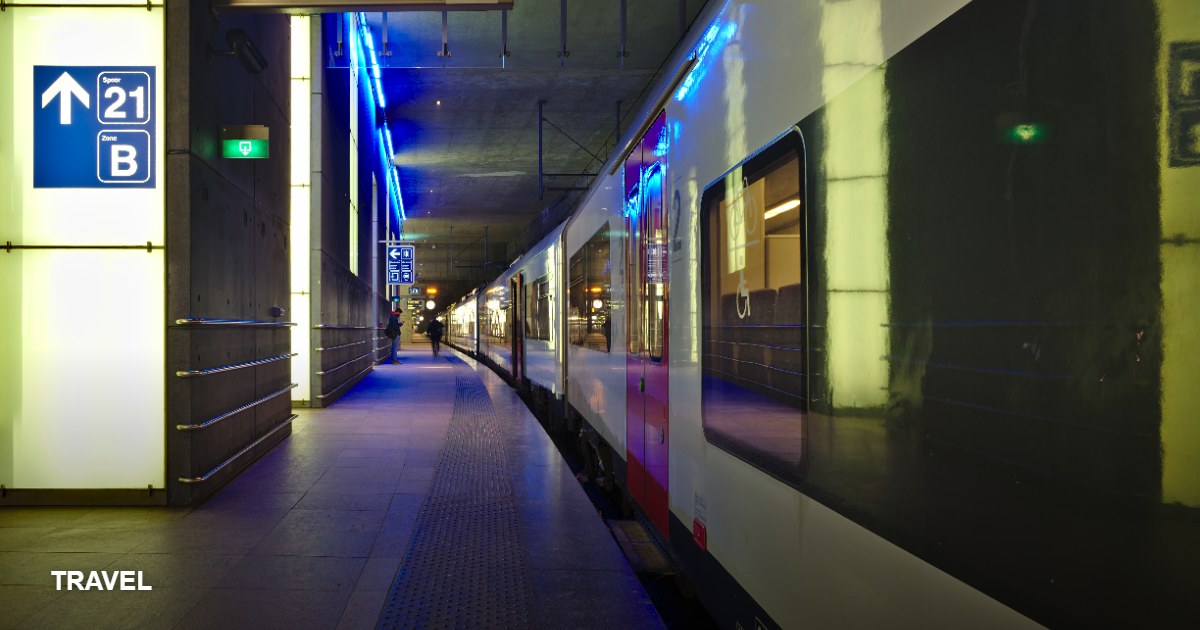
- Platforms appear late, and that’s normal. Fifteen to twenty minutes before departure is standard; the station is designed for it. Arrive twenty minutes early and you’re calm; arrive sixty minutes early and you’ve simply waited longer.
- Check the coach position displays. Larger stations show a platform diagram (Wagenreihungsplan in Germany) — where each car of your specific train will stop. Standing near your coach’s position converts boarding from a scramble into a step aboard.
- Validate where required. In Italy and a few other countries, regional paper tickets must be stamped in the small machines before boarding, or they’re technically invalid. (Mobile tickets are exempt — another reason the apps win.)
- Watch your belongings at the busiest stations. Major termini attract pickpockets precisely because travelers are distracted. Bags in front, zips closed, nothing valuable in outer pockets — the universal urban rules, applied at scale.
The Adlroom Travel Desk
5.On Board: Classes, Luggage, and Unwritten Rules
Classes. Second class on European trains is not a compromise — it’s how the continent travels, with comfortable seats, tables, and power on most intercity services. First class buys quieter cars, wider seats, and sometimes at-seat service; on long journeys booked early, the upgrade premium occasionally shrinks to a price worth paying. Check both fares before assuming.
Luggage. No weight limits, no bag fees, no carousel: you carry it, you stow it. Racks above the seats take carry-on-sized bags; larger cases go in the racks at the coach ends or between seat backs. The carry-on method from our light packing guide finds its natural home on the rails — a bag you can lift overhead is a bag that never worries you. Keep valuables on your person when you sleep or wander; the honesty level on European trains is high, and the opportunist level is not zero.
The unwritten rules. Quiet cars mean it — phone calls happen in the vestibule. Feet stay off seats. The seat reservation cards above seats are honored even when the train is crowded and the card-holder is late. And the café car operates on barter-grade goodwill: the staff have seen everything, and friendliness is the universal currency.
6.Designing a First Rail Trip: Three Proven Shapes
Table 2 — Three first-timer routes that always work
| Shape | Route | Why It Works |
|---|---|---|
| The Classic Triangle (7–10 days) | Prague → Vienna → Budapest | Three great capitals, 2–4 hour legs, cheap-rail territory, zero stress |
| The Alpine Line (5–7 days) | Zurich → Lucerne → Milan → Venice | Scenery as the attraction; book a panoramic car for the mountain stretch |
| The Night Train Grand Tour (10–14 days) | Paris → (night) → Vienna → Venice → (night) → Paris or beyond | Night legs erase travel days; waking in a new country is travel’s best trick |
Whatever the shape, two design rules apply. Three nights per city, minimum — the same settling-in principle as our city break guide; rail makes movement so easy that the temptation to move constantly is the main risk. And schedule one no-travel day every three or four days: a day where nothing is boarded and nothing is booked. Rail trips fail from motion sickness of the itinerary kind, never from the trains themselves.
7.The Scenic Routes Worth Planning Around
Some European rail journeys are transport; a select few are attractions in themselves — routes people fly across the world specifically to ride. Building an itinerary around one of these is the difference between a rail trip and a rail experience:
Table 3 — Five journeys where the train is the destination
| Route | Between | The Draw |
|---|---|---|
| Bernina line | Chur / St. Moritz → Tirano (Italy) | Glaciers, spiral viaducts, and the Bernina Pass at 2,253 m — arguably the most beautiful scheduled train ride on earth |
| West Highland Line | Glasgow → Mallaig (Scotland) | Lochs, moorland, and the Glenfinnan Viaduct; connects to ferries for Skye |
| Flåm Railway | Myrdal → Flåm (Norway) | Twenty kilometers descending 866 meters from mountain plateau to fjord |
| Semmering Railway | Vienna → Graz (Austria) | The 1854 original mountain railway — UNESCO-listed — on any ordinary Vienna–Graz ticket |
| Cinque Terre line | La Spezia → Levanto (Italy) | The pastel villages strung along the Ligurian cliffs, minutes apart, cars unnecessary |
Practical notes: panoramic routes in Switzerland accept ordinary tickets and passes (seat reservations recommended in summer), the Semmering requires nothing but a standard Vienna–Graz fare, and the Flåm is best ridden one-way as part of the classic “Norway in a Nutshell” loop rather than as a return. Reserve window seats early on all of them — on the Bernina, locals book the right-hand side heading south for the famous Brusio spiral; on the West Highland, the left side northbound catches the viaduct approach.
8.Seven First-Timer Mistakes, Preempted
- Buying the pass before doing the arithmetic. Price the point-to-point legs first — always. The pass must win on paper before it earns the purchase.
- Forgetting reservations. A pass is not a seat. On French, Spanish, and Italian high-speed trains and all sleepers, reserve — and on popular summer routes, reserve early.
- Waiting at the station an hour early. Twenty to thirty minutes is the local rhythm; platforms post late by design.
- Boarding by destination instead of train number. Several trains may serve your city; only your train honors your reservation. Match the number.
- Unvalidated regional tickets. In Italy especially, stamp the paper ticket before boarding or risk a fine from an unsympathetic inspector.
- Packing beyond the luggage racks. There is no baggage service — you stow what you bring. The carry-on capsule is the correct luggage.
- Over-scheduling the itinerary. Four cities in seven days is a tour of stations. Three nights minimum, one still day per three moving days.
9.Frequently Asked Questions
Do I need to speak the language to navigate stations?
No. Departure boards are universal in structure, major stations signpost in English, and ticket machines and apps all offer English. Learning to read “departures” in the local language is a pleasing flourish, not a requirement.
What if I miss my train?
On flexible tickets and pass travel without reservations: board the next one. On train-specific advance fares: the ticket is typically void — which is exactly why connection margins matter. Build forty-five-plus minutes into any cross-station transfer, and treat tight connections as emergencies to be rebooked at the desk immediately, where staff routinely help.
Are night trains worth it?
Emphatically, at least once. A sleeper compartment replaces a hotel night, erases a travel day, and delivers the single most romantic experience in European travel: falling asleep to the rhythm of the rails and waking in a different country. Book sleepers early — they sell out weeks ahead in season.
Which app should I actually use?
Each national operator’s own app (DB, SBB, ÖBB, SNCF, Trenitalia) for booking and live platforms, with bahn.de as the master timetable for cross-border planning. The operators’ apps handle delays, platform changes, and mobile tickets better than any third party.
Is rail travel really cheaper than flying?
Booked early on advance fares, often yes on routes under 600 km — and always cheaper once you count the true costs of flying: airport transfers both ends, bag fees, and the hour of the journey you spend standing in lines. Booked late, flying on a budget carrier frequently wins. The honest answer is the same as the pass question: do the twenty-minute arithmetic, journey by journey.
What happens if I miss a connection?
It depends on your ticket. With a single through-ticket, the railway owes you the next available train at no charge — go to the ticket office or find staff on the platform, and keep the ticket; it’s your proof. With separate tickets (common when mixing budget operators), each leg is your own responsibility, which is why connecting on separate tickets demands generous buffers of an hour or more. Rail passes sit somewhere in between: the pass covers the travel, but reservation fees for a missed train are usually lost, so book the next one and move on.
Is first class worth it?
Usually not for the seat itself — second class on modern European trains is comfortable, clean, and where the trip’s character lives. First class earns its premium in exactly three situations: long legs over three hours where the extra space and quieter car genuinely matter, peak-hour commuter corridors where second class fills to standing room, and overnight services where the upgrade buys a real bed. For a first-timer’s itinerary of two-to-three-hour hops, second class is the right call almost every time.
How do overnight sleeper trains work?
A sleeper converts travel time into hotel time: board at ten in the evening, wake in a new country at eight. Book early — sleeping berths are capacity-limited and sell out weeks ahead on popular routes like Vienna–Venice or Paris–the Alps. Options run from a bunk in a shared six-berth couchette (cheapest, social, bring earplugs) to a private compartment with its own washbasin. Pack a small overnight bag at the top of your luggage; you won’t want to unpack a full suitcase in a compartment the size of a closet.
Sources & Further Reading
Planning resources: Seat 61 (the definitive independent guide), the Eurail trip planner, and Deutsche Bahn’s international portal. All links verified live at publication. Pair with our carry-on packing method and the underrated cities list — several of which sit perfectly on these rails.
The first European train trip converts people the way the first carry-on-only arrival does: suddenly the continent looks smaller, friendlier, and threaded with silver lines. Do the arithmetic, reserve the seats, arrive twenty minutes early — and take the window seat. The Alps are better at eye level.