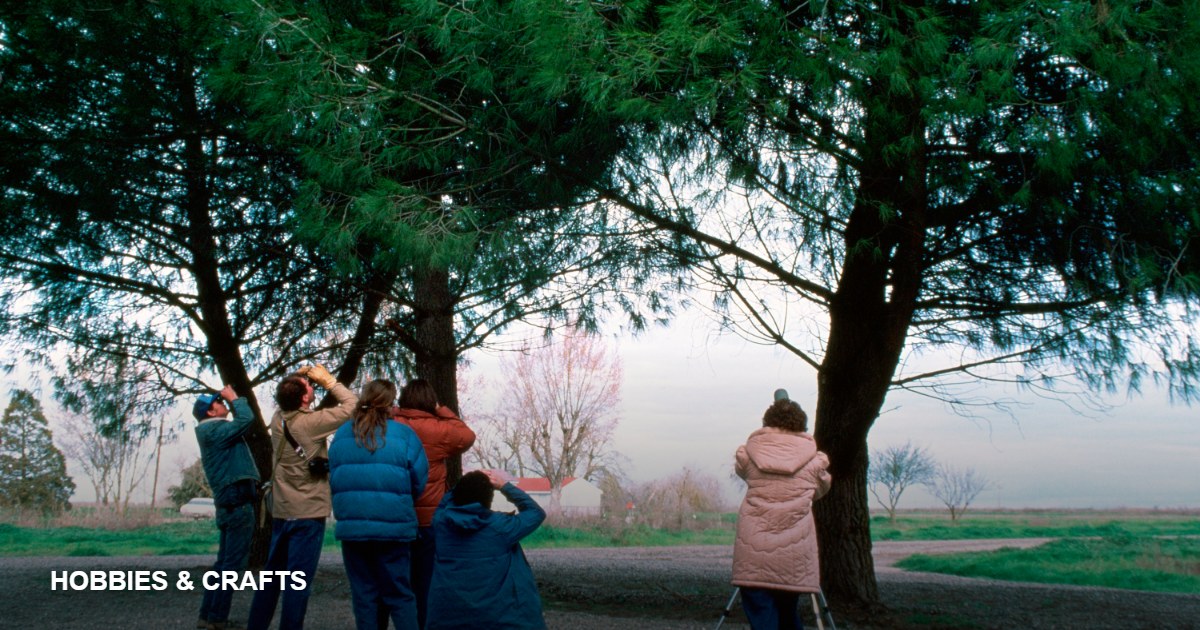
Somewhere near your home right now — probably within sight of your window — there is a wild animal with a ruby throat, or a crest like a cardinal’s, or a song that sounds like a squeaky swing. Birdwatching begins with a discovery that feels almost illicit: the wildlife documentary is not somewhere else. It’s outside, it’s free, it runs all day every day, and you have been walking past the cast your entire life. More than ninety million Americans watch birds in some form, and the hobby asks almost nothing to start: your attention, a pair of binoculars, and ten minutes.

What hooks people isn’t just the birds — it’s what birding does to a walk. A neighborhood stroll becomes a scavenger hunt; a lunch break becomes a stakeout; seasons stop being weather and start being arrivals and departures. Birders talk about the day their town gained a second layer, hidden in plain sight, and they tend to say it with genuine wonder years later. Few hobbies deliver so much for so little.

This guide covers your entire first year: the two purchases that matter (and the many that don’t), how identification actually works, the ten common birds that teach you the skill, where and when to look, the two free apps that have revolutionized the learning curve, the ethics of the field, and a season-by-season plan. The Audubon Society’s birding hub makes a fine companion reference, and their guide on how to start birding echoes much of what follows — because the fundamentals of this hobby are settled, simple, and kind to beginners.

1. The World’s Most Accessible Wildlife Hobby

Consider what birding doesn’t require. No membership, no range, no course fee, no reservation. No athleticism — some of the best birding in the world happens on flat park paths, from benches, even from cars and kitchen windows. No travel, at first: the average suburban backyard hosts twenty to thirty species across a year, and urban parks regularly top a hundred. No expensive gear at the entry level, and no gatekeeping — the birding community is legendarily delighted to help a beginner, because every birder remembers exactly who helped them tell a sparrow from a finch.

It also scales with your life in a way few hobbies do. Fifteen minutes on a Tuesday is a real birding session. So is a dawn trip to a marsh, a weekend chasing a rare visitor reported nearby, or — eventually — a vacation planned around migration. And it compounds: every bird you learn stays learned, so each year you walk into a richer world than the year before. Your hundredth species teaches you less than your tenth, but delights you more, because by then you understand what you’re seeing.

2. The Only Two Purchases That Matter

Birding’s gear industry would love you to believe otherwise, but the complete beginner’s kit is binoculars and a way to identify what you see. That’s the whole list.

Binoculars. The beginner standard is 8×42 — eight-power magnification with 42mm objective lenses — and it’s the sweet spot for good reason: enough reach for distant birds, a wide enough field of view to actually find a moving bird in the lenses, and bright enough for shady woods and gray mornings. A decent pair runs $120–250 and will serve you for a decade; below that range, frustration lurks, and above it, diminishing returns. Buy from a brand that birders actually use, try them in hand if you can, and learn one habit on day one: find the bird with your naked eyes first, keep looking at it, and raise the binoculars to your eyes without looking away. That single skill — eyes first, glass second — is most of what separates relaxed birders from frustrated ones.

Table 1 — Decoding binocular numbers
Spec What it means For birding
8×42 (the standard) 8x magnification, 42mm front lenses The do-everything beginner choice
10×42 More reach, narrower view, shakier Open country, shorelines; harder for beginners
8×32 (compact) Lighter, smaller, slightly dimmer Travel and small hands
Zoom binoculars Variable magnification Avoid — optical compromises everywhere

Identification. Skip the printed field guide for now — the free Merlin Bird ID app (more below) has effectively absorbed that job for beginners. When you eventually want a physical book, a regional guide beats a continental one: fewer pages, fewer impossible birds, faster lookups in the field.

Everything else can wait. Scope, camera harness, field vest, premium this-and-that — all of it answers problems you don’t have yet. If photography catches your interest later, birds are a magnificent and demanding subject, and our gear-free photography guide will get your eye ready long before a long lens enters the picture.

3. Learning to See: The Four Keys to Identification

Beginners identify birds by color. Experienced birders identify them by four keys, in a specific order of reliability — because color lies (light, distance, molt, and individual variation all bend it), while structure and behavior rarely do. This is the intellectual core of the whole hobby, and it’s learnable in a month:

1. Size and shape. Before anything else, compare the bird to one you know: smaller than a robin? Bigger than a crow? Then look at the silhouette — bill shape (seed-cracking cone? probing spear? hooked beak?), tail length, body proportions. Shape survives backlight, distance, and bad light; it’s the birder’s most trusted clue. 2. Color pattern. Not “what color is it” but “where are the colors” — an eye-ring, wing bars, a streaked breast, a colored cap. Pattern, not palette. 3. Behavior. Does it climb down tree trunks headfirst (nuthatch — almost nothing else does)? Flick its tail? Feed on the ground or in the canopy? Walk or hop? Behavior narrows families instantly. 4. Habitat and season. A duck-shaped bird in a parking lot in July and the same shape on a marsh in March are different puzzles; birds are faithful to habitat and calendar in ways that eliminate half the field guide before you open it.

The Thirty-Second Sketch

When a mystery bird appears, don’t reach for the app first — burn thirty seconds studying it, and if you can, scribble a terrible sketch with notes: bill shape, markings, what it was doing. Birds identified by your own observation stick in memory; birds identified by instant app lookup evaporate. Use the app to confirm, not to replace, your looking.

4. Your First Ten Birds (North American Edition)

Skill needs a foundation, and these ten common, distinctive species are the foundation most North American birders are built on. Learn them cold — by sight and by sound — and every new bird you meet will be measured against them. (Elsewhere in the world, the same method applies with your own common residents: learn the everyday dozen first.)

Table 2 — The foundation flock
Bird Know it by Signature sound
Northern Cardinal Red male with crest and black mask; warm-brown female shares the crest Loud, clear cheer-cheer-cheer whistles
American Robin Brick-orange breast, upright posture, lawn-hopping run-and-stop Cheerful caroling at dawn
Blue Jay Blue, crested, bold, loud — impossible to overlook Raucous jay-jay; also mimics hawks
Mourning Dove Plump, small-headed, pointed tail, ground feeder Sad, soft coo-OO-coo-coo
Black-capped Chickadee Tiny acrobat, black cap and bib, white cheeks Says its name: chick-a-dee-dee-dee
Downy Woodpecker Smallest woodpecker, checkered back, drumming on dead branches Sharp pik and a descending whinny
House Finch Streaky brown; male’s raspberry-red head and breast Bright, warbling song from wires
American Goldfinch Male is lemon-yellow with black cap in summer; bouncy, dipping flight Po-ta-to-chip call on the wing
Red-tailed Hawk Big buteo on highway poles; brick-red tail in adults The scream Hollywood dubs onto every eagle
Mallard The default duck; green-headed male, mottled female with orange bill The female’s classic quack

Notice what this table quietly teaches: sound. By your second month you’ll identify more birds by ear than by eye — birders estimate that in leafy habitats, seventy percent of detections are auditory. It feels like a superpower arriving. It is just practice.

5. Where to Go, and When

Start at home. Spend your first two weeks on your own street, yard, or nearest patch of green; familiar ground lets you learn bird behavior without travel logistics. Then find edges. Birds concentrate where habitats meet — forest edge beside meadow, water beside land, shrub beside lawn — and a park with mixed edges will out-produce a uniform forest every time. Water multiplies everything: ponds, creeks, and marshes add ducks, herons, kingfishers, and blackbirds to any list, and they’re visible in the open, which is merciful for beginners. Cemeteries, botanical gardens, and sewage lagoons — yes, really — are famous among birders for habitat and quiet.

Time of day matters more than location. The first two hours after sunrise are the peak of bird activity — song, feeding, movement — and midday in summer can feel like the birds left town. Late afternoon picks up again. Bird at dawn a few times in your first month; the dawn chorus of a May morning is the experience that converts dabblers into lifelong birders. Seasons write the calendar: spring migration (April–May in the north) is the spectacle of the year, with waves of warblers and shorebirds passing through even city parks; autumn migration is longer and quieter; winter concentrates birds at feeders and open water; summer is for watching nesting behavior close to home. Planning a spring weekend around a migration hotspot makes a superb short trip — our road trip planning guide handles the logistics while you handle the binoculars.

6. The Two Apps That Changed Everything

Two free tools from the Cornell Lab of Ornithology have compressed what used to be years of apprenticeship into months. Merlin Bird ID (Merlin Bird ID) is the identification engine: answer five questions (where, when, size, colors, behavior) and it offers likely matches with photos and sounds — and its Sound ID feature listens through your phone and names singing birds in real time, which feels like magic the first dozen times. eBird (ebird.org/home) is the logbook and the map: record your sightings, and it keeps your life list automatically while showing you what other birders are seeing near you right now — including rarity alerts that let you drive twenty minutes to see a bird that strayed a thousand miles off course. Your checklists also feed real science: eBird data powers migration forecasts and conservation research used worldwide.

Use both with the discipline from earlier: look first, app second. Merlin confirming your identification is a lesson; Merlin replacing it is a shortcut that quietly robs you.

7. Field Ethics: The Bird Comes First

Birding has a short, serious code, and learning it early is part of joining the community. The bird’s welfare outranks your view — never flush a resting bird repeatedly, never approach nests closely, and back off from any bird showing alarm. Go easy on audio playback (playing recorded songs to lure birds in): it stresses territorial birds, especially during breeding season, and many reserves ban it outright. Stay on paths and respect property, private and posted. Share sightings honestly — report what you actually saw, at the location you saw it; eBird’s science depends on it. And share the moment generously: when you find something good, point it out to the stranger with binoculars down the path. That’s not just kindness; it’s the tradition that built the community you’re joining.

8. Your First Year, Season by Season

Table 3 — The beginner’s calendar
Season What’s happening Your mission
First spring Migration in full flood; dawn chorus peaks Bird a local park at sunrise weekly; let Merlin Sound ID teach you songs; aim for 30–40 species
First summer Nesting and fledging; birds quieter, closer to home Watch behavior — feeding young, territory disputes; learn your backyard cast completely
First autumn Southbound migration, mixed flocks, sparrow season Follow a mixed flock for an hour; start an eBird life list in earnest
First winter Feeder birds, waterfowl on open water, hawks easy in bare trees Hang a feeder (black-oil sunflower is the universal seed); visit a lake for ducks; 60+ species by spring is a fine first-year tally

One tradition worth starting immediately: the field notebook. Date, place, weather, birds seen, one line of behavior — a page a week. Apps keep the list, but the notebook keeps the story, and rereading your first tentative pages a year later is one of the hobby’s quietest, best pleasures.

9. Frequently Asked Questions

Do I need to join anything or go with experienced birders?

No — but a guided walk with a local Audubon chapter or bird club will teach you more in two hours than a month alone, and beginners are explicitly welcome at virtually all of them. Check your local chapter’s calendar; most walks are free.

Is birdwatching the same as birding?

Colloquially, yes. If there’s a distinction, “birding” implies the active pursuit — lists, targets, deliberate trips — while “birdwatching” is the gentler observation. Nobody at a park will quiz you. Use whichever word you like; the birds don’t care.

What if I can’t afford binoculars yet?

Start anyway. Feeders, waterfowl at parks, hawks on poles, and all birding-by-ear work fine with naked eyes and the free apps. A borrowed or budget pair bridges the gap; upgrade when the hobby proves itself to you, which it will.

How do people find rare birds?

Mostly through eBird’s alerts and local birder networks: someone reports an unusual sighting, and word travels. “Chasing” a rarity — a twitch, in the hobby’s vocabulary — is a famous pleasure, but wait until your common-bird foundation is solid; rarity is only legible against the ordinary.

Can kids bird?

Wonderfully. Birds move, make noise, and appear quickly — the exact opposite of most nature study. Give a child cheap binoculars, a feeder outside the window, and a sticker chart of species, and you’ve given them a hobby for life.

What’s a “spark bird”?

Birders’ term for the one bird that ignited the obsession — the flash of a painted bunting at a feeder, a hawk stooping over a highway, the owl that stared back. Nearly every lifelong birder can name theirs instantly, decades later. Yours is coming, probably in the first few months, probably when you least expect it. When it happens, write it in the field notebook. You’ll want the date.

Sources & Further Reading

Getting started and species guides: the Audubon birding hub and Audubon’s how to start birding; identification and listing: Merlin Bird ID and eBird from the Cornell Lab of Ornithology. All links verified live at publication.

The barrier to birding is not knowledge, gear, or travel — it’s the one-time decision to actually look. Tomorrow morning, take ten minutes, stand somewhere with a tree and a sky, and count what moves. Three species, probably five. By spring you’ll know their names; by next year you’ll know their songs; and somewhere in there, without noticing exactly when, you’ll have become a person who walks outside and sees the second layer. It’s been there the whole time. Welcome to it.