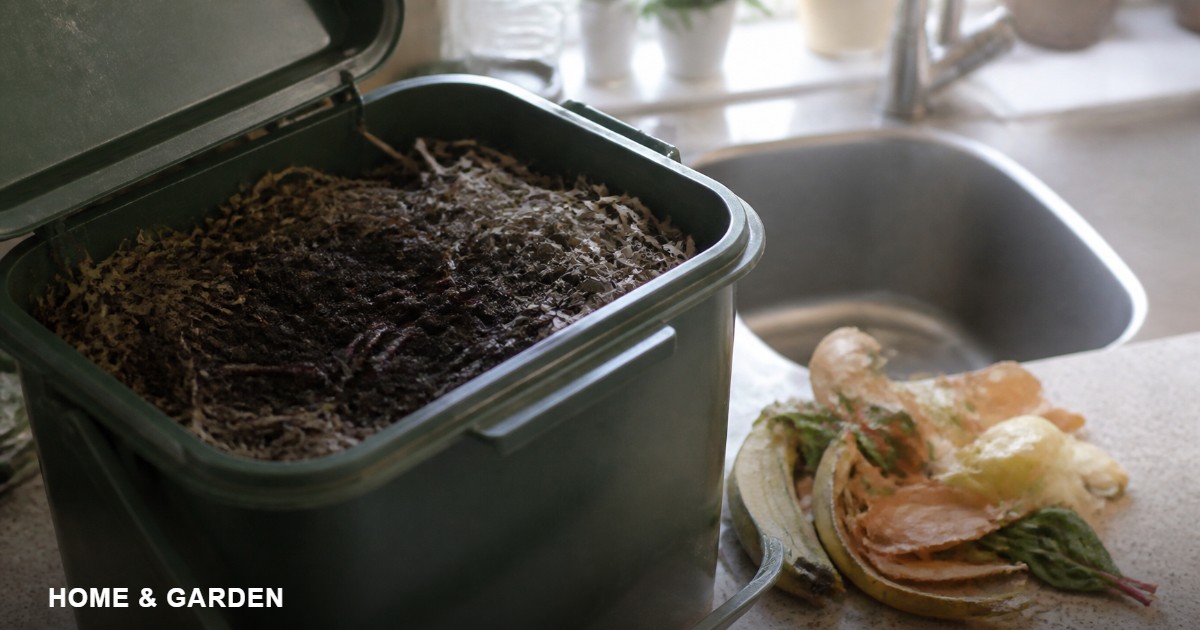
A backyard compost pile is not an option when the backyard belongs to someone else and the lease says nothing about turning a pile of food scraps in the corner of it. That does not rule out composting — it rules out one specific method. Vermicomposting, a bin of worms that quietly eats kitchen scraps and lives under a sink or in a closet, was built for exactly this kind of space.
What actually goes in the bin
Nitrogen-rich scraps (“greens”) keep the worms fed: fruit and vegetable trimmings, coffee grounds and paper filters, plain tea bags without staples, and crushed eggshells. Carbon-rich material (“browns”) keeps the bin from turning into a wet, smelly mess: dry leaves, shredded plain paper, shredded cardboard without wax or glue, and small twigs.
Leave out meat, fish, dairy, oils, cooked leftovers, diseased plant material, and pet waste. The EPA’s home composting guidance excludes all of these for the same reason: they attract pests and smell before they break down.
Build a bin that fits under a sink
- A plastic storage bin of roughly 10–18 gallons with a lid, drilled with small drainage holes in the bottom and air holes near the top.
- Moistened, shredded newspaper or plain cardboard as bedding, filling the bin about three-quarters full.
- Red wiggler worms — roughly one pound per bin to start, not garden earthworms, which are a different species and don’t thrive in a bin.
- A tray or bricks underneath to catch the occasional drip and keep the bin off the floor.
Feed it like a slow eater, not a garbage disposal
Chop scraps small and start with modest amounts — a full bin of hungry worms takes weeks to establish. Bury each addition under two inches of bedding, rotating which corner you use so the whole bin gets fed evenly. Bedding should feel like a wrung-out sponge: damp, never dripping, never bone dry.
Read the signals
- Bad smell: usually too much food added at once, or a bin that’s too wet. Add dry bedding and feed less for a week.
- Fruit flies: food scraps left uncovered. Bury new additions deeper and cover any exposed scraps immediately.
- Dry, crumbly bedding and worms clustered at the bottom: the bin is too dry. Mist it with water until it feels damp again.
- Worms trying to climb out: conditions are off — check for excess moisture, acidity from too much citrus, or blocked air holes.
What to actually do with it
Finished vermicompost is usually ready in three to six months: dark, crumbly, and smelling like soil rather than food. Without a yard, it still has plenty of uses — worked into pots for windowsill herbs, top-dressing a balcony container garden, or given to a neighbor with a yard or a local community garden that accepts donations.
Already growing herbs on a windowsill? This compost is the cheapest upgrade you can give them. And if a balcony is the next project, our guide to balcony container gardening covers the sun, wind, and weight checks worth doing before the containers go out.
A realistic pace
A single small bin will not absorb everything a household throws away, and it is not a substitute for a municipal compost or yard-waste pickup if your building or city already offers one — that option needs no maintenance from you at all, so check for it first. Vermicomposting is also slower than a hot backyard pile and sensitive to temperature extremes above roughly 90°F/32°C or near freezing, so a bin kept somewhere too hot or too cold will stall. None of that makes it not worth doing. It just means the payoff is measured in months, not days.
Sources and further reading

Claire Whitmore is the Home & Garden Editor at The Adlroom Journal. She focuses on making small or rented spaces work better, without a renovation budget.