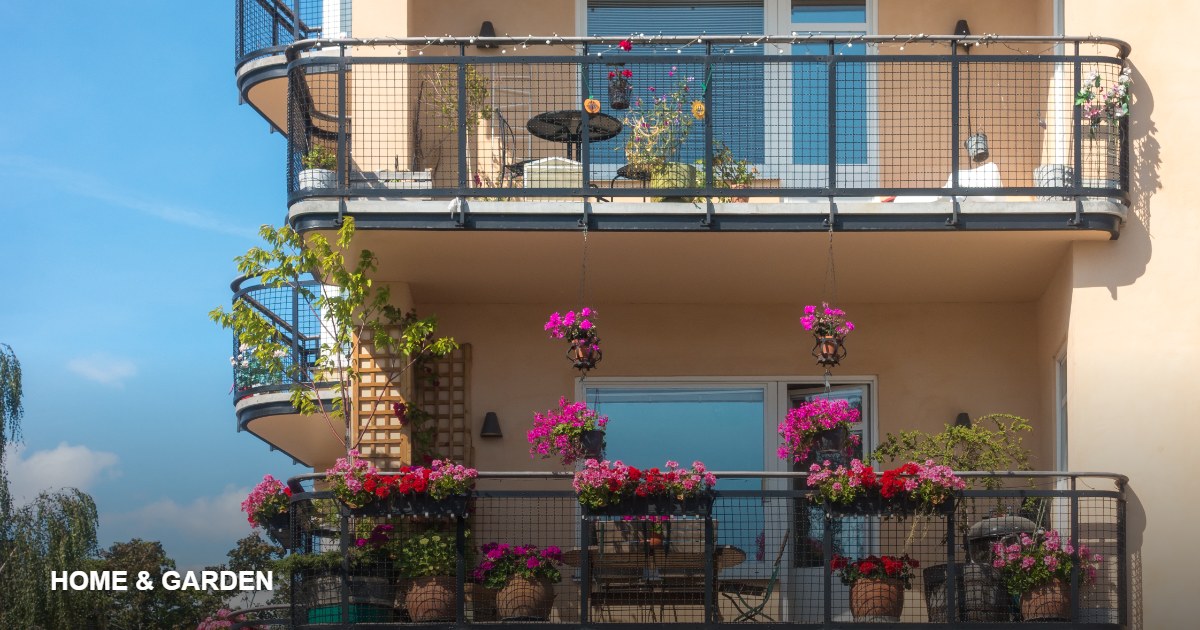
A balcony garden has a habit of looking easy in photographs: six pots, a tomato vine, perhaps a chair in the corner. What the photograph hides is the wet weight of the soil, the wind at the fifth floor, and the fact that “bright” does not necessarily mean six hours of direct sun. Spend one day measuring those constraints before buying a single plant. It is cheaper than learning through twelve dead seedlings.
Start With an Honest Light Assessment
Spend a day actually watching your balcony rather than guessing. Note when direct sun arrives and when it leaves, and for how many total hours. Six or more hours of direct sun opens the door to tomatoes, peppers, and most flowering plants. Three to five hours suits leafy greens, herbs, and many root vegetables. Under three hours limits you to genuinely shade-tolerant plants like ferns, hostas, and some begonias, though even these want bright indirect light rather than deep shade.
Weight, Wind, and Structural Reality
Wet containers become heavy quickly: a large pot can weigh tens of pounds before the plant matures. Do not estimate your balcony’s capacity or assume that placing pots near a wall makes the load safe. Ask the building manager, landlord, or a qualified structural professional for the permitted load and any rules about planters. Keep containers inside the railing, secure anything that wind could lift, and make sure drainage cannot fall onto neighbors below.
Measure before you shop
- Record direct sun every hour for one clear day.
- Measure the usable floor area and the widest safe pot diameter.
- Confirm the balcony’s load limit and planter rules.
- Check where drained water will go.
- Notice the strongest wind direction; tall tomatoes need support before they need fruit.
Choosing Containers
Choose containers by usable soil volume, not appearance alone. A compact tomato generally needs at least a 5-gallon/19-litre container; larger indeterminate varieties need more room and strong support. Most herbs can begin in 1–3 gallons/4–11 litres, while shallow greens care more about surface area than depth. Every pot needs open drainage holes and a saucer that is emptied after watering.
What Actually Grows Well in Containers
- Tomatoes: compact or determinate varieties (bred to stay smaller) do better in containers than sprawling heirloom types.
- Peppers: compact by nature and well suited to pots, tolerating the heat that balconies often trap.
- Leafy greens: lettuce, spinach, and chard grow quickly in shallower containers and tolerate a bit less light than fruiting plants.
- Herbs: nearly all herbs suited to windowsills do even better with the stronger light of a balcony.
- Bush beans: productive in containers without needing the trellising that pole beans require.
- Strawberries: shallow-rooted and well suited to wide, shallow containers or hanging planters.
Watering on a Balcony
Container soil dries out faster than garden soil, and balcony wind accelerates that further, so daily checks during summer are often necessary rather than optional. A simple finger test, an inch into the soil, tells you what you need to know. Self-watering containers with a built-in reservoir reduce the daily burden significantly and are worth the extra cost if you travel often or simply forget.
Soil and Feeding
Use a quality bagged potting mix rather than garden soil, which compacts badly in containers. Container plants exhaust nutrients faster than garden plants because there is less soil to draw from, so a balanced liquid fertilizer every two to three weeks during the growing season keeps them productive, tapering off as the season winds down.
If space is tighter than a full balcony setup allows, our guide to growing herbs on a windowsill covers the smallest possible version of this same idea, and once the harvest starts coming in, organizing a small kitchen makes it much easier to actually use what you grow.
Claire Whitmore is the Home & Garden Editor at The Adlroom Journal. She focuses on making small or rented spaces work better, without a renovation budget.