Small-Space Gardening: How to Grow Fresh Herbs on Any Windowsill
You don’t need a garden, a balcony, or even particularly green fingers to cook with fresh herbs all year. You need one sunny window, a few pots with holes in the bottom, and about ten minutes a week. This is the complete system — what to grow, where to put it, how to water it, and the harvesting rule that turns one basil plant into a summer-long supply.
Walk into almost any supermarket and you will find the same sad ritual repeated daily: a plastic clamshell of basil, cut three days ago, already slumping at the corners, priced like a luxury item. It will flavor one meal, perhaps two, and the rest will blacken in the refrigerator drawer next to last week’s parsley. Now consider the alternative sitting on a thousand kitchen windowsills across the country: a living basil plant that cost roughly the same as that clamshell, quietly producing fresh leaves for months, asking only for light and an occasional drink.
Windowsill herb gardening is the single highest-return entry point into growing your own food. It requires no yard, no digging, no weeding, and almost no equipment. The investment is measured in single-digit dollars, the learning curve is measured in days rather than seasons, and the payoff arrives every time you cook. A pot of chives on the sill means omelets with real bite. A mint plant means proper tea and better summer drinks. A rosemary bush means roast potatoes that taste like a restaurant made them.
Yet most first attempts fail — not because herbs are difficult, but because beginners repeat a handful of predictable mistakes: the wrong window, a pot without drainage, too much love in the form of daily watering. This guide exists to help you skip that learning curve entirely. Every recommendation here is grounded in guidance from university extension programs and horticultural societies, which we link to directly so you can check the sources yourself.
1.Why a Windowsill Beats the Supermarket Shelf
The case for growing your own herbs rests on three pillars: flavor, cost, and waste. On flavor, there is no honest comparison. Culinary herbs derive their taste from volatile essential oils stored in the leaves, and those oils begin degrading the moment a stem is cut. Herbs that travel from farm to distribution center to store shelf have already lost a meaningful share of their aromatic compounds before you ever bring them home. A leaf snipped thirty seconds before it hits the pan is a different ingredient entirely.
On cost, the arithmetic favors the windowsill almost immediately, as we break down in detail in section 10. And on waste, the difference is structural: when you buy cut herbs, you pay for a whole bundle whether your recipe needs six leaves or sixty. When you grow them, the plant holds your inventory fresh on the stem until the exact moment you need it. Nothing wilts in a drawer. Nothing gets thrown away.
The Adlroom Home Desk
There is also a quieter benefit that experienced indoor gardeners mention again and again: the simple pleasure of tending something alive in the room where you spend the most time. A windowsill herb garden is a two-minute daily ritual — a glance at the soil, a pinch of a leaf, the smell of basil on your fingertips — that costs nothing and asks almost nothing.
2.What the Research Says About Growing Herbs Indoors
Horticultural extension programs — the public research arms of universities — have studied home herb growing for decades, and their conclusions are remarkably consistent. Three findings matter most for the windowsill gardener.
First, light is the limiting factor indoors, and it is not close. The University of Minnesota Extension’s guide to growing herbs in home gardens states that most herbs require at least six hours of direct sunlight to grow well, with all-day sun being even better — and that indoors, “it is crucial to give herbs the best light available.” The same guide warns that insufficient light produces exactly what beginners dread: spindly, thin, weak growth. If you remember one principle from this entire guide, make it this one: choose the window before you choose the herbs.
Second, drainage is non-negotiable. University extension guidance is blunt on this point: containers used for growing herbs, indoors or out, should always have holes in the bottom. Constantly soggy soil encourages root rots, which extension researchers identify as the most common problem of herbs grown indoors. Nearly every “my herb just died” story ends at a decorative pot with no drainage hole.
Third, herbs prefer lean conditions. Counterintuitively, rich, heavily fertilized soil produces worse herbs. The Minnesota Extension notes that soils with high nutrient content can hurt herb quality by promoting rapid, lush growth containing only small amounts of the essential oils responsible for aroma and flavor. Utah State University Extension’s guide to herbs in the garden echoes this: most culinary herbs evolved in the rocky, sun-baked soils of the Mediterranean, and they reward restraint. Overfeeding your basil is literally watering down its flavor.
The Three Research Rules
1. Six-plus hours of direct light, or the brightest window you have. 2. Every pot must drain. 3. Fertilize sparingly — lean soil means flavorful leaves. Everything else in this guide is a practical application of these three findings.
3.The Eight Best Herbs for a Windowsill, Ranked
Not every herb belongs indoors. Some, like dill and fennel, grow tall, deep-rooted, and sulky in pots. Others, like coriander (cilantro), bolt to seed so quickly in warm rooms that they frustrate beginners. The eight below were selected for three qualities: they tolerate container life, they produce generously under indoor light, and they are genuinely useful in everyday cooking. They are ranked from most forgiving to most demanding.
Table 1 — The windowsill eight: light needs, difficulty, and time to first harvest
| Herb | Min. Direct Light | Difficulty | First Harvest | Best Kitchen Use |
|---|---|---|---|---|
| Chives | 4–6 hrs | Very easy | ~30 days from seed | Eggs, potatoes, soups, garnishes |
| Mint | 4–6 hrs | Very easy | Immediate from a plant | Teas, drinks, salads, desserts |
| Oregano | 6+ hrs | Easy | ~40 days from seed | Pizza, pasta, grilled meats |
| Thyme | 6+ hrs | Easy | Slow — buy a plant | Roasts, stews, breads |
| Parsley | 4–6 hrs | Moderate | ~70 days from seed | Almost everything savory |
| Rosemary | 6–8 hrs | Moderate | Buy a plant | Roast potatoes, lamb, focaccia |
| Basil | 6+ hrs | Moderate | ~28 days from seed | Pesto, caprese, curries |
| Cilantro | 4–6 hrs | Demanding | ~3 weeks, then bolts | Salsas, curries, garnishes |
Chives earn the top spot because they are nearly indestructible: they tolerate the lower light of an east-facing window, bounce back from forgotten waterings, and regrow vigorously after every snip. A single pot of chives, harvested correctly, can produce for years. The Old Farmer’s Almanac’s growing guide for chives confirms their reputation as one of the easiest perennial herbs a home grower can keep.
Mint is the other bulletproof choice — so vigorous, in fact, that the main risk is ambition. Always give mint its own pot; planted alongside other herbs it will bully them for water and root space. The Royal Horticultural Society’s mint growing guide recommends exactly this containment approach, and it applies double on a crowded windowsill.
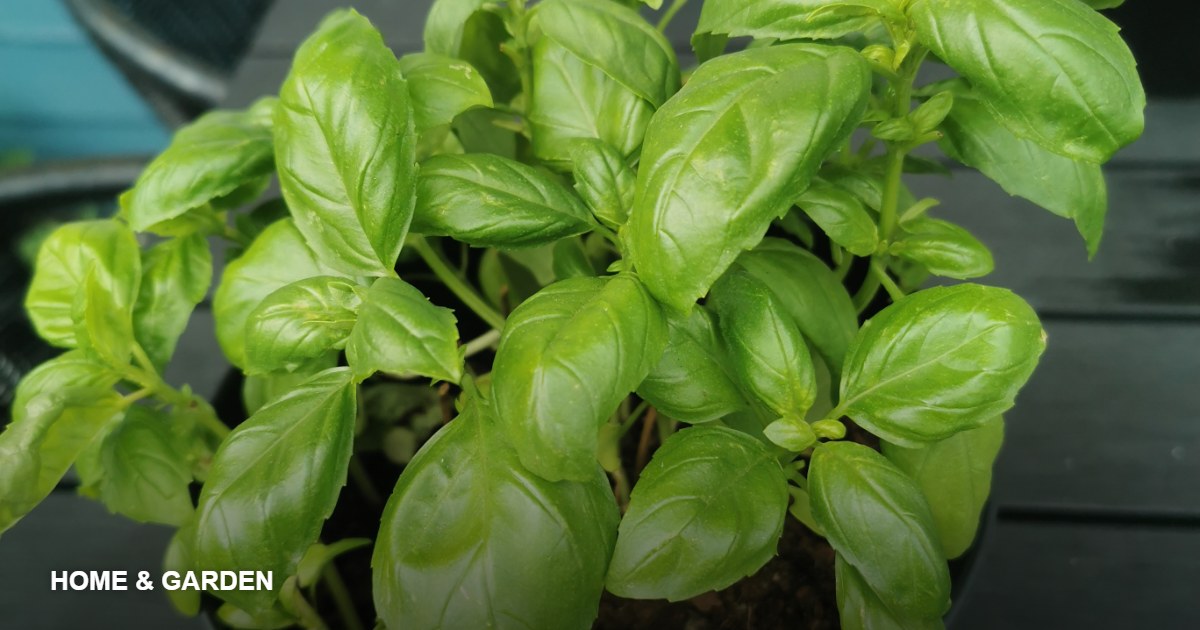
Basil is the herb most people want, and it is entirely achievable indoors with one condition: a genuinely sunny, warm spot. Basil is a heat-loving plant that stalls in cool rooms. The Almanac’s basil guide recommends six to eight hours of bright light and consistently warm temperatures — a south-facing sill above a radiator in winter is basil paradise. Treat it well and a single plant can be harvested weekly all summer long.
Parsley deserves a special mention because it is the most-used herb in most kitchens yet tests beginners’ patience: seeds can take three weeks to germinate. The shortcut is to buy a small nursery plant, or to soak seeds overnight before sowing. The RHS parsley guide covers both routes in detail. Once established, parsley is a generous, long-lived producer on a bright sill.
Beginner’s Shortcut
Skip seeds for your first round. Buy three small established plants — chives, mint, and basil — from any garden center or even the supermarket’s living-herb section. You will be harvesting within a week instead of waiting a month, and you will learn watering and light management on forgiving plants before you ever germinate a seed.
4.Choosing the Right Window
Since light is the limiting factor, window selection deserves more thought than any other decision in this guide. Not all windows are equal, and the differences are larger than most people assume. In the Northern Hemisphere, orientation changes everything: a south-facing window can receive two to three times the daily light energy of a north-facing one, and the gap widens dramatically in winter when the sun rides low and days shorten.
Table 2 — Window orientation guide (Northern Hemisphere; reverse north/south for Southern)
| Orientation | Direct Sun | Character | Best Herbs |
|---|---|---|---|
| South | 6–10 hrs | Strongest, most consistent light all year | Basil, rosemary, thyme, oregano — everything |
| West | 4–6 hrs | Intense afternoon sun; can scorch in summer | Oregano, thyme, basil (watch summer heat) |
| East | 3–5 hrs | Gentle morning sun, cooler overall | Chives, parsley, mint, cilantro |
| North | 0–2 hrs | Bright shade at best; weakest in winter | Mint and parsley may survive; consider a grow light |
University extension guidance recommends a southern or western exposure for most herbs, with a bright east-facing window acceptable for the more tolerant species. If your home genuinely offers only a north-facing window, you have two honest options: stick to mint and parsley and accept slower growth, or add a small LED grow light. Modern clip-on grow lights are inexpensive, use negligible electricity, and extension research confirms that twelve hours of artificial light daily is sufficient for most indoor-grown herbs. Set the light on a cheap plug-in timer and the whole system runs itself.
Two window details catch beginners off guard. First, glass matters: sunlight loses intensity passing through window panes, and herbs pressed against cold winter glass can suffer chill damage on their leaves — keep foliage from touching the pane on frosty nights. Second, rotation matters: plants bend toward light, so give each pot a quarter-turn every few days to keep growth even and upright.
5.Pots, Drainage, and Soil
The container rules are simple and absolute. Every pot needs at least one drainage hole in the bottom — this is the single strongest predictor of windowsill success. Beyond that, size matters more than material: a pot of 15 to 20 centimeters (6 to 8 inches) in diameter gives a single herb enough root room to grow for a full season, while tiny decorative pots dry out within hours on a sunny sill and stunt the plant.
Table 3 — Pot materials compared for indoor herb growing
| Material | Drying Speed | Weight | Notes |
|---|---|---|---|
| Terracotta (unglazed) | Fast — breathes | Heavy | Best for Mediterranean herbs (rosemary, thyme, oregano) that hate wet feet; classic look |
| Glazed ceramic | Moderate | Heavy | Good all-rounder; check that decorative pots actually have holes — many don’t |
| Plastic | Slow — retains moisture | Light | Best for thirsty herbs (basil, parsley, mint); forgiving if you travel |
| Fabric grow bags | Fastest | Very light | Excellent root health, but dry out quickly indoors; need trays underneath |
Whatever material you choose, pair every pot with a saucer or tray, and never let a pot sit in standing water for more than an hour. A practical upgrade many experienced indoor gardeners swear by: add a centimeter of pebbles to the saucer so the pot base rests above any runoff rather than in it.
For soil, buy a bag of quality potting mix — never scoop garden soil, which compacts in containers, drains poorly, and may carry pests indoors. Look for a mix labeled for containers or herbs; if it feels heavy and dense, lighten it with roughly one part perlite to four parts mix. Remember the research rule from section 2: herbs evolved in lean, free-draining ground, so a basic, unfertilized potting mix with added drainage is closer to their native conditions than a rich, moisture-retentive “premium” blend. Target a soil pH in the 6.0–7.5 range — virtually all commercial potting mixes land there naturally.
6.Watering Without Guesswork
More windowsill herbs die from overwatering than from any other cause, and the reason is a misunderstanding of what “regular watering” means. It does not mean a little water every day. It means a thorough soaking whenever the plant actually needs it, followed by a pause while the soil breathes. Roots need oxygen as much as they need water; soil that never dries suffocates them and invites the root rots that extension researchers call the most common indoor herb problem.
The reliable method is the finger test, and it never lies: push your index finger into the soil to the first knuckle. If the soil feels dry at that depth, water thoroughly until it runs freely from the drainage hole, then empty the saucer. If it still feels cool and moist, do nothing and check again tomorrow. For most windowsill setups, this lands on a rhythm of every two to four days in summer and every four to seven in winter — but let the soil, not the calendar, make the call.
The One Exception to the Rule
Never let herbs wilt repeatedly between waterings. Extension guidance is explicit on this point: allow plants to wilt again and again and you will permanently weaken them, costing flavor and vigor. The finger test works because it catches the soil just before the plant reaches the wilting point. Check daily for your first two weeks to learn each pot’s rhythm.
Water at the soil line, not over the leaves — wet foliage in still indoor air invites fungal problems, especially on basil. Room-temperature water is kinder than cold tap water straight onto warm roots. And if your tap water is heavily chlorinated, letting a watering can sit out overnight before use is a small courtesy your plants will quietly appreciate.
7.Feeding: Less Is More
If watering is where beginners kill plants with kindness, feeding is a close second. Recall the core research finding: nutrient-rich conditions push herbs into fast, lush, watery growth at the direct expense of the essential oils that make them worth growing. An overfed basil plant looks magnificent and tastes like lettuce.
The extension-recommended regime for container herbs indoors is a liquid fertilizer at half the label-recommended strength, applied once every six weeks. That is the entire program. Choose a balanced, all-purpose liquid feed, dilute it to half strength, mark a six-week reminder, and resist the urge to do more. Herbs in a sunny window during the peak growing months of late spring and summer can move to every four weeks if growth visibly slows, but six is the safe default.
Two signs tell you feeding is actually needed: paling, yellowish older leaves despite correct watering, and growth that has stalled for weeks in good light. If your herbs are green and producing, the kindest thing you can do is leave them alone.
8.Harvesting: The One-Third Rule
Here is the counterintuitive heart of herb growing: harvesting is not the reward at the end of the process — harvesting is the process. Herbs are cut-and-come-again plants. Every correct snip signals the plant to branch and produce more. A basil plant harvested weekly grows bushier and more productive; a basil plant left untouched grows tall, leggy, flowers, turns bitter, and quits.
The governing rule, consistent across horticultural guidance: never remove more than one-third of the plant at a single harvest. Take more and the plant lacks the leaf area to photosynthesize its recovery; take a third or less and it rebounds within days. For leafy herbs like basil, mint, and oregano, cut stems just above a pair of leaves or a leaf node — new shoots will emerge from that exact point, doubling the stems you can harvest next time. Pinch basil flower buds the moment they appear; once the plant commits to flowering, leaf production and flavor both decline.
Timing matters too. Extension research recommends harvesting in the mid-morning, after any dew has dried but before the heat of the day — this is when the essential oil concentration in the leaves peaks. On a windowsill the effect is gentler than in an outdoor garden, but morning-snipped herbs still carry a noticeable aromatic edge. Cut only what you will use that day; the plant is a better storage device than any refrigerator.
For the cut-and-come-again stalwarts — chives and parsley — the technique differs slightly: cut whole stems near the base of the plant rather than snipping tips, taking from the outside of the clump and leaving the center to regrow. Done this way, both will produce continuously for months on end.
9.Troubleshooting: Symptom, Cause, Fix
Windowsill herbs communicate clearly once you learn their vocabulary. Nearly every problem you will encounter maps to one of the handful of causes below — and most fixes cost nothing but an adjustment of habit.
Table 4 — The windowsill diagnostic chart
| Symptom | Most Likely Cause | Fix |
|---|---|---|
| Tall, thin, “leggy” stems leaning hard toward glass | Insufficient light | Move to a brighter window, rotate pots every few days, or add a small grow light (12 hrs/day) |
| Yellowing lower leaves, limp despite wet soil | Overwatering / poor drainage | Check drainage holes, let soil dry to first knuckle, empty saucers after watering |
| Crispy brown leaf edges, soil pulls from pot sides | Underwatering | Soak thoroughly until water drains; check daily and water when dry at knuckle depth |
| Lush, fast growth but weak flavor | Overfeeding | Stop fertilizing for two months; resume at half strength, six-week intervals |
| Brown-black patches on basil leaves | Chill damage from cold glass | Move pot a few centimeters from the pane on cold nights; basil hates below 10°C/50°F |
| Tiny green insects clustered on new growth | Aphids | Rinse under a gentle tap or wipe with soapy water; repeat every few days until clear |
| Fine webbing under leaves, speckled foliage | Spider mites (dry indoor air) | Increase humidity around plants, rinse foliage, isolate the affected pot |
| Small flies hovering over soil | Fungus gnats (constantly wet soil) | Let the top layer dry fully between waterings; they starve quickly |
| Sudden flower stalks on basil or cilantro | Bolting (heat, age, or stress) | Pinch flowers immediately, harvest more frequently; for cilantro, re-sow — it’s done |
Notice how many rows trace back to the same two roots: light and water. Master those two variables — a bright window and the finger test — and you have preempted perhaps ninety percent of everything that goes wrong on a windowsill.
10.The Cost Math: Store-Bought vs. Homegrown
Frugality should never be the only reason to grow herbs — flavor is the real prize — but the numbers are worth seeing laid out. The comparison below uses typical US supermarket prices for fresh cut herbs against the one-time and running costs of a basic three-pot windowsill setup. Your local prices will vary, but the structure of the math holds almost everywhere.
Table 5 — First-year cost comparison: buying vs. growing (typical US prices)
| Item | Store-Bought Route | Windowsill Route |
|---|---|---|
| Weekly herb purchase (1 pack, ~$3) | $3 × 30 weeks = $90 | — |
| Three starter plants | — | $9–12 one-time |
| Three 6-inch pots with drainage | — | $6–10 one-time |
| Potting mix (small bag) | — | $5–8 one-time |
| Liquid fertilizer (lasts years) | — | $6 one-time |
| Approximate first-year total | ~$90+ | ~$26–36 |
The windowsill route typically pays for itself within eight to ten weeks of regular harvesting — and that assumes you only replace a single modest weekly herb purchase. Households that cook with herbs several times a week, or that buy the pricier living-herb pots anyway, reach break-even far sooner. In year two, the running cost drops to nearly nothing: a little fertilizer, perhaps fresh potting mix. Meanwhile the hidden savings compound quietly: fewer abandoned half-bundles in the fridge, fewer mid-recipe dashes to the store, and no more paying premium prices for a pale imitation of the fresh thing.
11.Seven Mistakes That Kill Windowsill Herbs
Every failed windowsill garden we’ve researched traces back to one or more of these. They are listed roughly in order of how frequently they strike beginners:
- Choosing herbs before choosing the window. Falling in love with rosemary and basil when you own only a north-facing sill sets everyone up for disappointment. Audit your light first, then pick from the column of Table 2 that matches it.
- Pots without drainage holes. Decorative cachepots are the silent killer of indoor herbs. Either drill holes, use a drilled inner pot inside the decorative one, or accept that the plant is living on borrowed time.
- Daily “sip” watering. Small daily splashes keep the topsoil damp and the roots shallow and rotting. Deep, infrequent, finger-tested waterings build resilient root systems.
- Overfeeding. More fertilizer means more leaves and less flavor. Half-strength, every six weeks, and no more.
- Never harvesting. An unharvested herb is a dying herb. Regular cutting is not consumption; it is maintenance. Give away what you can’t use.
- Crowding one pot with many plants. Supermarket living-herb pots often contain a dozen seedlings jammed together, engineered for shelf appeal rather than longevity. Divide them into two or three pots within a week of purchase and they will reward you for months.
- Expecting summer growth in winter. Short December days mean slower growth and lower water needs. Ease off both watering and feeding in winter, and don’t mistake seasonal dormancy for failure.
12.Frequently Asked Questions
Can I grow herbs on a windowsill year-round?
Yes, with adjusted expectations. Chives, mint, parsley, thyme, and rosemary will all keep producing through winter on a bright sill, though more slowly. Basil struggles in short, cold days unless it gets a genuinely warm, sunny spot or supplemental light. Many indoor gardeners treat winter as maintenance season and restart basil from seed in early spring.
How long does a windowsill herb plant live?
It depends on the herb’s nature. Perennials like chives, mint, thyme, oregano, and rosemary can live for years in pots with basic care. Basil and cilantro are annuals — genetically programmed to flower, seed, and die within months — so plan to re-sow them two or three times a year rather than fighting their biology.
Do I need a grow light?
Only if your brightest window is north-facing or if you want peak basil production through winter. For most people with a south-, west-, or east-facing window, natural light plus the tolerant herb choices in Table 1 is entirely sufficient. If you do buy one, an inexpensive clip-on LED on a twelve-hour timer covers two or three pots comfortably.
Why do my supermarket herb pots die within weeks?
Usually for three stacked reasons: they’re overcrowded (see mistake six above), they’re grown under perfect greenhouse light that your window can’t instantly match, and they’re often root-bound in tiny pots. The rescue protocol is simple: repot into a larger container with fresh mix within a week, divide crowded clumps, place in your brightest window, and water only by the finger test.
Is tap water safe for herbs?
Standard municipal tap water is fine for herbs in the vast majority of homes. If your water is very heavily chlorinated or you notice persistent leaf-tip browning, filling your watering can the night before and letting it stand allows chlorine to dissipate — a free fix worth trying.
What’s the single best herb to start with?
Chives, without hesitation. They forgive low light, forgive irregular watering, regrow indefinitely after cutting, and earn their keep in the kitchen constantly. Build your confidence on chives, then add mint, then graduate to basil once you’ve learned your window’s true character.
Can I mix several herbs in one pot?
You can, but match roommates carefully. Group by thirst: rosemary, thyme, and oregano like to dry out between waterings, while basil, parsley, and chives prefer even moisture. Mint always gets its own pot — its roots will colonize any shared container within a season. When in doubt, separate pots give you independent control over watering, which matters more than the saved shelf space.
Sources & Further Reading
This guide draws on guidance from the University of Minnesota Extension, Utah State University Extension, the Royal Horticultural Society, and The Old Farmer’s Almanac growing guides for basil and chives. All external links were verified live at publication.
The windowsill herb garden asks for almost nothing: a bright window, three pots with holes, a bag of soil, and a finger willing to test the dirt. What it returns — fresh flavor on demand, a small daily ritual, and the quiet satisfaction of snipping dinner from a living thing you raised — is wildly out of proportion to the investment. Start with chives this weekend. By the time the basil goes in, you’ll wonder why you ever bought the clamshells.